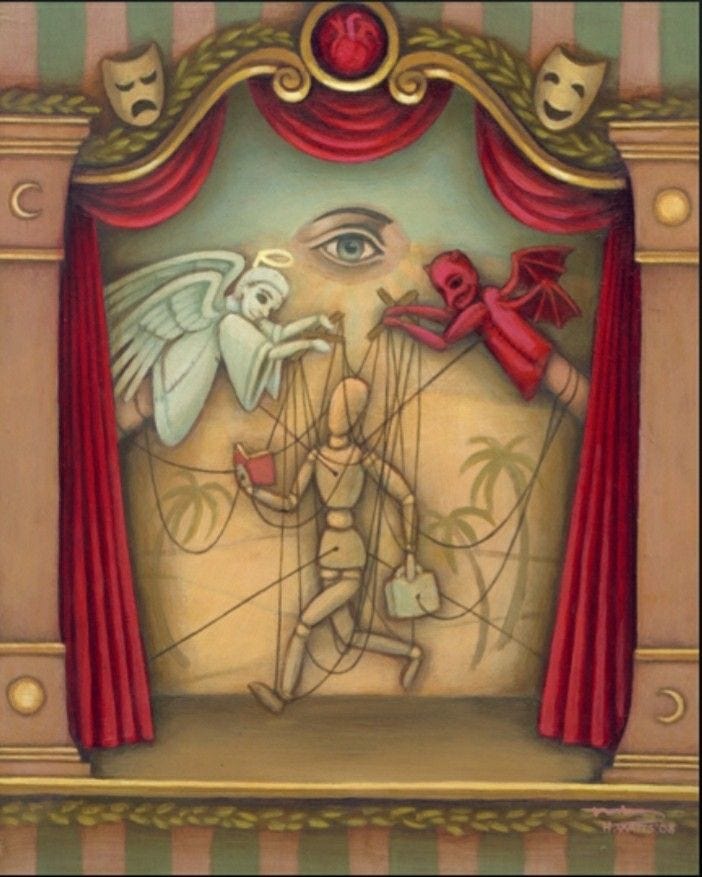
A polemical answer for the problem of evil
Sometimes theology gets weird...

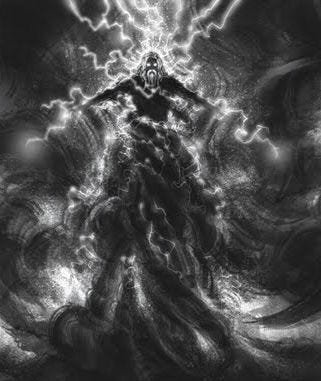
Does Idealism mean that the Mind at Large is God? For the reader taste would be or not , making idealism be either theist or atheist, through theological questions are still covered, in special the problem of evil as is the focus of that article.
Why the Mind at Large allows evil to exist? Within idealism, this question has generated a fruitful discussion, organized as three branches: The “distant God” from hinduism, the “irrational blind Will” of classic Schopenhaurian Idealism, and the “pure good God that give for us free will” from platonism and Abrahamical religions. Each position is deeply problematic as will be explained in that article.
In answer, is argumented that suffering has a purpose and that the Mind at large use both evil and good for it’s evolution through life process and therefore humanity. Despite have terrible suffering, this world is a theater created specifically for the Impersonal God achieve metacognition, personality and wisdom, being pain therefore necessary for this goal. Horrible suffering in the othet hand. Is argumented that is a illusion from hollow people without a soul for experience pain and emotions: The hollow entities.
The problem of evil dilemma
This article argument that there is no conventional answer for the problem of evil as the purposes are failed to deal with cases of extreme suffering and cruelty, being the only solution a anti realist position.
The problem of evil, know since ancient times as a hard problem for a benevolent and all powerful God, is discussed frequently in philosophy of religion and theology. Atheists believe that refutes the existence of a benevolent God while theists often assume that free will or a distant and impessoal divinity answer the question well. Both are misuderstand. There is God or the Mind at Large under Idealism what is regarded as the best and only reasoable metaphysics, what the author argument that is benevolent for motives later explained that are valid even under a impersonal Mind at Large. Calling the Universal Mind or not of God still has the same theological and ethical questions for the problem of evil, be for theists or atheists.
The problem of cruelty in the world:
I God exist, is all powerful, omninebevolent, omnipresent and omniscient.
II Look that there is terrible suffering in the world and God does not prevent or end that
I I I Or God is benevolent and prevent or end the extreme suffering in the world or there is no extreme suffering , both are irreconciable since God necessarialy known and has the power and wish to end that due it’s benevolence
The history of the God relation with the problem of evil conceptions and their problems
While in the modern age is common what is called Central Theism as a Omninebevolent and morally ideal god as is of Christianism and Islamism, In the history of religion , showed up a variety of theologies with differents answers for the nature of God, like in the dharmic religions that postulate God as impessoal and distant or platonism with the Monad while being perfectly good is non active in the emanated World.
Normally gave the absurd suffering in Earth - both natural and human world. Is hard to understand how a purely good God can allow that to happens. In that understanding, a “impersonal and distant” God may look as better over a morally and benevolent one, but even that has it’s own hard problem.
In modern philosophy, there is new insights over the nature of the Mind at Large and how it answer the problem of evil, starting with Arthur Schopenhauer with it’s Will of the World, conceived be irrational, blind and impulsive, without notion to the own suffering. Bernardo Kastrup, with it’s analytical idealism that is a contemporany form of Schopenhauerism, gave the answer that such suffering may be in purpose for some goal, as he says that pain drives for creative solutions. Over the branche of Schopenhauerian and analytical idealism thst the author of this article answer will be give, by first analyzing, refuting and making a syntesis of each past theology.
The problem with the theology of the distant and non concerned God
Within idealism, the Vedas religion often postulate Brahman as the Ultimate Reality as a non personal and distant God. In the same way is the Monad of Platonism as purely good but not active in the World events. Both are in this article main examples of the “distant and impessoal God” theology. In relation to the problem of evil may look that explain with God regarded as indiferent to the World affairs, but actually not over idealism.
Being all things in God or the Mind at large as within the holistic Whole is its parts, all is interconected into the Divine that all know and can use its power in whatever place that wish. Then there is no way that God not know of suffering happening in Earth and knowing that not make anything about that. Why? Because the problem of evil is about God hurting God as all is into God Wholeness as it’s parts. Using the analogy of the foot be in pain, the human brain already feel And know that wishing to deal with that pain Then the Universe being the body of God, the pain in it’s foot (Earth) would catche it’s attention to deal with that hurt body part. There is no way that the Universal Mind is not aware of it’s own horrible suffering in Earth and not wish to deal with that.
Another line of argument is about God creating the World . We humans but also animals, fungi and plants for example, are the childrens or sons of the Universal Mind. There is a maternal or pathernal instinct of the Mind at Large to care of it’s sons and daughters as us are it’s avatars dissociated. Even a non personal God is still instinctive to care of its manifested parts as the life in the world, such as a instinctive animal is to its prole (note: That not mean that God is a animal but rather just instinctive), since they are parts of the Universal Mind and intense suffering for itself would be avoided or stroped. Therefore the origin of the Mother and Father archetypes are fundamental instincts of the Mind at Large to care of its manifested dissociated avatars as ourselves who are it’s childrens, be in a personal or non personal instinctive God, in any way the Divinity is ignorant of our pain, distant or non concerned but instead is deeply active and caring of us.
The problem with the Schopenhaurian blind and irrational Will of the World
Schopenhaurian Will of the World is argumented as blind and ignorant of what is really making, and therefore of it’s own pain how deal with that, manifested into the organisms in their constant fight for survival and procreation as their blood mess. Is instinctive instead rational, not having notion of be lost in it’s own labyrinth of suffering. Such terrible metaphysical had leaved him to a deeply pessimismo anf even anti Natalism. Is about God lost in it’s own terrible nightmare.
Kastrup, in the other hand argumented that the suffering has a purpose. The author of this article agree, give that If the Universal Will wished to Imagine or create a world in which life evolved for be peaceful, like plants and certain fungus that are, but for inteligent beings alike as a Garden of Eden with plants giving fruits for humans eating them and living happy between themselves, that would happen by sure. Then even if the Will of the World is irrational and blind as a instinctive God, not mean that would be lost in it’s own meaningless suffering.
The morally perfect God
The problem of evil is more evident in relation to classic theism with its omninebevolent and morally perfect deity. The problem is, how such divinity can allow the terrible suffering of life exist? There is answer for such question, but the most famous one is free will, despite be problematic over a determinist vision, as well the absurd concept that evil not exisy but rather is a absence of good.
First, evil is real as feeling. The pain of hit the foot in the wall, the suffering of a disease or the cut blood wound by the knife, are real, they have substance as the feeling of suffering. The same is true for the destructive evils like losing a house due fire or a car in a acident, since these are a different state for the same material that is either build or destructed, the material as real but having different states, being the destructed one not meraly absence as nothing but other organization or arrangement that make us feel bad due that. Both evil and good are real things.
For the human free will as a explanation for the problem of evil isn’t enough to answer since God would have created us morally ideal and still with free will to make eithet x or Y action as our choices, then without disposition to cruelty, egoism, sadism and greed.
Take by a determinist perspective, if we will make horrible actions or not is dependent of our levels of empath, compassion and altruism. Those that are higher in these states by felting the pleasure or pain of others as themselves are determined to be good, heroic persons while those that lack it and due that have no problems in feel amusement or indiference for the other pain are the cruel ones, psycopathas and sociopaths. In others words there is no free will for our disposition to be good or evil persons as it is already determined by our personality states and not merely choices indepedent of personality.
Therefore If God made us with good, heroic personalities, the absurd suffering of our world would not be present and we still would have free will for those that believe in it as we would choose X or Y (like a cake or a pie). But as demonstated by our choices being determined by our personalities, free will isn’t as a answer for the problem of evil.
The theology of the God who is both benevolent and malevolent
Give the presence of horrible evil in the World, there is the question: How the benevolent God can allow that if he has the power to end or prevent such suffering? As argumented above, if he wished would make a paradise where humans lived happy. But that would allow evolution? There enter the role of Evil. Together, good and evil are in a dialetical way used by the Mind at Large for gain evolution through us, living humans
If the world was a paradise where humans lived happy running and jumping in the fields, eating fruits and having sex, would have created higher culture, technology and civilization? Politics, morality,, science and philosophy? In others words, would God know a itself through us? Clearly not, even metacognition would not be born in this way as is a reaction to think solution for problems. Without problems, without evolution. Happines has a dowside, that is estagnation. Then the Mind at Large use suffering for itself as a tool to gain knowledge of itself.
Humanity has the role of understand the world around them as the Universe self reflecting through human beings, creating insights from their experiences and giving them for the Divinity in life and once they die. Good and evil are the driver forces that through humanity make the progress towards the development of the Universal Divinity, as pleasure give the satisfation to keep going, a rest, while destruction and suffering give motivation to fix problems by creating news tools, technologies, cultures, sciences and philosopies.
The absurd of hell
The concept of hell as a place in which the sinners are send and face agonizing torment for a long time or even forever is absurd under analyical idealism. The Universal Mind is everything as it’s parts, then even if you consider humans as not the cosmic divine mind but into that as it’s parts, are still manifestations of such universality and not outside. Therefore such as is absurd the brain give extreme torment to the arm and hand as it’s body parts, is absurd the cosmic mind give to it’s manifested parts as humans sinners or not any kind of agonizing torment. Self harm leaved to its extremes of agony are non sense.
The problem of the cruel torture and the anti realist solution
Some kinds of suffering are too extreme that haven’t any value for get insights but instead are just terrible agony. Specially in cases of torture, are things that the benevolence of God would never let happens. But they look that happens then how the Mind at Large would let happen such extreme agony in itself through us?
Some would say that such extreme agony is justifed, but how a person would face the worst kind of suffering by just poisoning to death a king for example? Even serial killers or people of the worst kind not deserve such torture, as is manifestations of the Mind at Large both the victim and the criminal, being better just end suffering instead create more non necessary cruel suffering for itself.
Same thing is to try appeal for free will of humans as justify for cruelty, as already explained God as the creator of our personalities and dispositions for benevolence or cruelty, has the responsability to not let ourselves suffer cruely.
For instance, historical examples of cruel tortures that haven’t even words to describe how of extreme agonyzing intense suffering are as the reader can search about, for example for war prisoners, traitors, political enemies and traitors, but also for serial killers victims, definitely look to refutes the existence of a a benevolent God who under no circustance would allow that happens, as everyone suffering is the Universal Mind own suffering as it’s parts. Then how to explain that? The only explanation is denying that they happened, a position that is over “anti realism” position of philosophy.
The philosophical zombie
But what that really mean? There is historical reports of such cruel tortures happening over them then what? The answer is surprising: They aren’t real persons, then they did not feel any pain, being instead something analog to philosophical zombies. In philosophy of mind, there is beings that are conscious, it means having a sense of be them (like there is a sense of you be a bat and live having its experiences), experiencing emotions, feelings, pleasure and pain. And there is philosophical zombies, as entities that look be conscious but aren’t. What that means? They behave precisely like a conscious being, will laugh if its friends laugh of happines, will cry if lose its family, and will scream if be hurt in a aciddent, but they haven’t any emotion, pleasure or pain, just behave in these situations like if had. In others words, there is no sense of be them and experience emotions, pain and pleasure by their perspective.
Then is clear how a philosophical zombie answer the problem of cruel torture: A philosophical zombie if suffer torture, actually not experience anything because there is no way to be them experiencing such agonizing suffering, just they look that suffer, screaming and crying, but not felting any pain. If God did create philosophical zombies that not suffer but just look that suffer cruely, then it answer the problem of cruel torture as a benevolent God never would let that happens.
It is used as a example about how to preserve a benevolent God in the face of what look be extreme suffering. The purpose of the author is to offer something analogue to the philosophical zombie: The hollow entities, also called as souless ones. concepts that have historical precedents.
The ontology of the hollow entities
In the history of philosophy and religion, the perception that some persons aren’t really real did happens over time, motivated by theological reasons but different of the showed in that article, showing that would be called as a evolution of the same idea.
First the gnostic christians look that appeared with that idea, with their cosmology that the world is a fallen and corrupt emanation resulted by the egoism of Sophia in not worship in communion the Absolute Divinity but praise God merely by herself, a error resulting in the Demiurge as her son as a ignorant or malevolous crafter of the material world. In the view of these gnostics, there is hylics, psychics and pnemautics, respectively as those of matter, those with a intent to the divine but still confuse by the matter, and finally the ones that have their souls as purely dedicated to the Divinity, being the saints and spiritual genious of humanity.
The hylics are material in the sense that lack a divine spark, a soul contemplative for the Divinity and spirituality, being merely instinctive, wishing material pleasures and nothing else. As are often regarded as inable to ascend to psychics or pneumatics, they are regarded to destruction after death as they not transcended the Demiurge material realm.
Then came the already mentioned philosophical zombie in works of philosophy of mind, as beings that lack a subjective experience or a sense of be them by experiencing their emotions, pleasure and pain.
Finally, there is in the time of computers, videogames and internet the “NPCS” or non playable character, therms that mean in the game context characters of the scenario that aren’t played by the gamer but just interacted by, showing that the idea of hollow or souless persons that aren’t real but just look be, are present even in the pop culture.
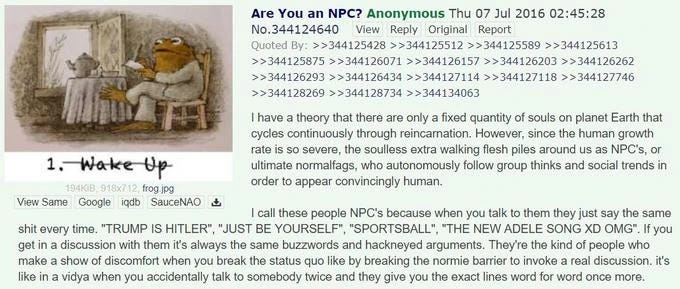
What a hollow character really mean?
Despite a hollow character be analogue to a philosophical zombie, they aren’t the same thing. Unlike a philosophical zombie that lack the sense of Be him by having experiences, there is how to be a Hollow Characther and by him experience the World by his perspective. Hollow characters have a personality and a desire, a will, but what they lack is emotions, feelings and therefore pain.
That difference mean important for ethical considerations, as philosophical zombies haven’t any reason for be well or bad treated, but hollow characters do have as will be explained later.
Dreamed hollow characters
A empirical example of hollow husks are dream characters from personal dreams. They will react badly if you hurt them, and scream in agony if you put fire over them, or cut their bodies in pieces. Do it mean that they really felt pain as you did hurt them? Of course not. But there is how be they with their personalities and desires by their perspective as created by your personal mind, just that hollow or empty of emotions, pain or pleasure.
Hollow husks may look absurd or something from pure intelectual contemplation, but they happen daily with us in our night dreams, then just apply them for real life as a collective dream world.
The real world is a collective dream in which the dissociated avatars of the Universal Mind live to experience by their perspectives with their emotions and feelings, but as parts of the dream there is the hollow entities that despite have “how to be” them and live by their perspectives, lack emotions, feelings or the ability to feel pleasure or pain, being just personalities with desires interacted by the avatars.
Ethical considerations for hollow husks
A objection for theory that hollow husks are real people living in our world, is that they such as philosophical zombies, not deserve well care, being allowed be abused like if were robots.
This is a strong reason for a person have struggle to adopt such theory, as they would think that if their loved ones are maybe NPCS, then don’t really deserve compassion and care.
But hollow husks, have a sense of be them and live in the world from their perspective, with their own personalities and desires, unlike philosophical zombies that lack that. If they wish food, friends and family, health and conffort from a good quality of life, we need to be altruist and care of them as society, as ourselves wish to be well treated by them.
Therefore, ethical considerations remmains under a world lived by hollow husks together with real humans.
How to know who is a hollow entity and a conscious human?
This is a valid and complicated question as we may appoint to stranges and beloved ones as hollow entities, then how to know who is and not? The gnostic christians leave a track: Those who live to materialist impulses and instincts instead the Absolute Divinity are a strong indication, reason for why today in the modern world are called NPCS. However, that alone may be not enough, as some of the greatest genius in humanity may be hollow entities too.
Besides that we need to trust in God omnioscence as it know from the moment of birth to death who we are.
Our lifes aren’t affected if we live around normal humans and hollow ones as the ethical considerations remmains the same, then there is no great reason to want to discover who is and not.
The World as a theater for the Divinity evolution
What is the purpose of that world where there so much suffering and deception? For the Divinity get metacognition, wisdom, personality and creative self knowldge through human avatars with our the self aware minds.
Such as the purpose of pleasure is to let us to be deluded for life, for suffering it is to make us not too conffortable with life state and look to solutions by improve our situations. Due the plague that medicine was developed, technological development had a boom with warfare, and earthquakes as well floods made improve architeture for the human settlements. Therefore, evil is a essential tool for humans reflect about the nature of the world and in this way wish to that improve, creating culture, science and philosophy.
For instances of what look be people suffering cruely, that is explained as a they not be real persons who feel pain and emotions but rather just hollow husks that lack the skill to feel any pain, manifested by God as elements of the theather together those empty humans behaving instinctively for their world roles.
In that collective dream world that avatars of the Divinity who feel emotions, pleasure and pain live for through it’s perspectives experience reality and creatively understand and improve it’s situation in this special way creating insights for the Mind at Large what allow it’s cosmic evolution to get personality, wisdom, metacognition and creative self knowledge.